The History of Wine Production in Brazil
The potential of Brazil is so high that should the Rio Grande do Sul region have the same or similar climate to Cuyo in Argentina or Chile, it would be the largest and the best wine-producing country in the New World. Nobody needs to fear Australian or Californian competitors there.
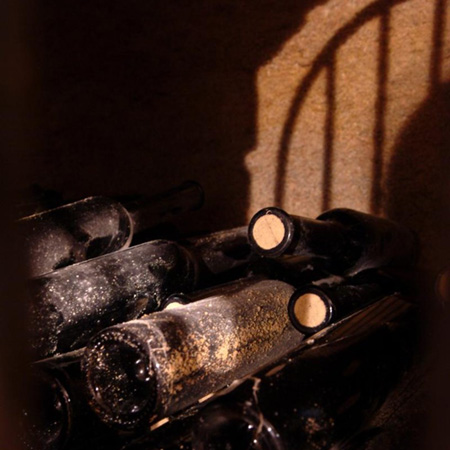
90% of Brazilian wine comes from the mountainous regions of the most southern state of the Brazilian Federation, called Rio Grande do Sul. Currently, local winemakers supply the market with wines of outstanding quality.
The Winemaking Industry
Brazilian winemaking is one of the best-equipped industries in South America thanks to foreign companies such as Chandon, Cinzano, Martini and others. During the last twenty or thirty years, these companies have invested large amounts of money in the restoration of local vineyards and wineries. . You can find technologies of both domestic and foreign origin in all the wineries of Brazil. The casks and oak chips produced in Rio Grande do Sul are made of imported French or American oak components.
Almost 95% of all wineries producing fine wines are family businesses.
Wine tourism is well organized there, and Vale dos Vinhedos is well prepared for visitors. It also offers the culture and gastronomy of Northern Italy, which can be found all over the Sierra Gaucha region.
History in Short
The first Brazilian wine was produced in Tatuape - Sao Paulo in 1551, as Bras Cubas attempted (unsuccessfully) to establish a vineyard on the coast near Sao Vicente in 1532.
The Portuguese established more vineyards at different places in the middle of the sixteenth century. Unfortunately, they chose places with unsuitable climate such as Bahia and Pernanbuco. In the meantime, the Spanish began growing vine along the Panama river.
Gradually, the cultivation of vineyards started in other regions of the New World: in San Salvádor and on the Itamaraca island. A Jesuit missionary Roque Gonzales began growing grapevine in the south on the left bank of the Uruguay river. He had brought the vine from Spain as well as all the other equipment necessary for the production of wine. Before long, other Jesuits established and expanded plantations with cotton, tobacco, corn and vegetables. Unfortunately, this activity was brought to an end due to disputes between the Portuguese and the Spanish.
A kind of "Renaissance" of vineyards began with another wave of immigration after 1732. The varieties that were grown at that time included Malvasia, Oscatel, Alvarano, Ferral and others.
The first person to introduce the industrial production of white and red wines and the distilling of vine residues was Manuel de Macedo.
Another important figure is Thomas Messiter, an Englishman, who was the first in Brazil to grow grapes from the famous vine "vitis labrusca" in 1814. The vine adapted to the unfavourable climate much more easily than other European varieties.
The arrival of the first European immigrants in the south of Brazil was therefore, an important point in the history of Brazilian wine production.
In 1860, the Portuguese started growing wine in Santa Catarina, which is near Sao Bento do Sul, Campo Alegre and Florianpolis. The French were probably the first who thought of using the wine commercially after 1865. However, Italians with their tradition and winegrowing experience reaching back more than two thousand years, were the ones who ensured the importance of winegrowing after 1875. They brought their own varieties and new commercial programmes.
Fifty years later, when the German community came, the significance of winegrowing and winemaking increased in other regions, especially in Sao Sebastiao do Cai, Bom principio and Feliz.
Modernization
There were no further improvements in quality until the 1960s. The market, which was not oriented towards wine consumption, paid little attention to this area.
This motivated the Rio Grande do Sul state to launch a campaign aimed at increasing yields and quality, mainly by replacing the European varieties with American ones.
Shortly after the huge success of this campaign in the 1980s, there were other very successful campaigns, predominantly aimed at promoting consumption of local Brazilian wine. A lot of winemaking businesses began adopting technologies for winegrowing and grape processing similar to the ones used in the USA and Europe.
Rio Grande do Sul, which produces about 92 % of all wine, can be proud of its producers who introduced wines of such quality that they aroused interest even abroad.
No doubt, there are a lot of complications when they have to overcome such problems as the weather unsuitable for the specific cultivation but the states and the producers expend considerable effort to introduce further improvements.
To achieve international recognition, Brazil joined the "Office International de la Vigne e du Vin" in March 1995. The country expects it will be able to benefit from the scientific and technical support of this organization and that it will gain guarantees for its export. Moreover, Brazil will introduce the European method of indication of origin. Another important factor to further increase wine quality is Brazil's effort to obtain more investments.
Vineyards
There are about 78,000 hectares of vineyards located in the states of Rio Grande do Sul (about 40,000 hectares), Santa Catarina, Parana, Sao Paulo, Minas Gerais and Pernambuco. There are about 16,000 producers.
Varieties
Brazil grows all fine wine varieties. White wines: Riesling Italico, Malvasia, Sauvignon, Semillon, Chardonnay, Gewurtztraminer, Pinot Bianco and Moscato. Red wines: Merlot, Cabernet, Sauvignon, Cabernet Franc, Gamay, Syrah, Tannat, Pinot Noir, and also Nebbiolo and Barbera.
Legislation
The regulations for viticulture have not yet been fully defined; for example, there is no compulsory deadline for harvesting. However, as every wine in the world, Brazilian wines comply with certain compulsory labelling regulations. The law stipulates the following identification marks:
The wine producer's and the bottler's name
The region and winery address
Name, fineness, classification, type and origin of the product
Agricultural area and the registration number of the product
The INDUSTRIA BRASILEIRA sign
Net volume
Actual alcoholic strength by volume
All used additives or their code and class
It is forbidden to put a false geographical indication on the label. The most common type of wine, the slightly sweetened "vinho de mesa" (table wine), must be indicated "suave" or "doce" (dry or sweet), printed on the label. Sparkling wines must be indicated with the method of production (gaseificado - aerated). This word must be printed in letters sized min. 50 % of the biggest word and must be in the same colour as the other information.
Explanatory Notes
Comum - wine produced from hybrids and American vine
Seco - wine containing less than 5 g/l of sugar
Leve - wine containing 1 to 10 g/l of sugar
Meio doce - wine containing 5 to 20 g/l of sugar
Doce ou Suave - wine containing more than 20 g/l of sugar
Varietal - wine produced from min. 60 % of the grape variety stated on the label
Vinho de mesa - wine containing 10 to 13 % of alcohol
Vinho fino